Tuesday, February 12, 2008


Whose History are museums really telling? With plaque’s of text including about 80 words give or take twenty, how can they be telling the full story? In situations where there are 100s or 1000s of words it is still difficult to tell the full story, and even then there is still the issue of great biases. So, can a plaque in front of a display at a museum truly be telling the full story? Or are museums doomed to be misleading the uninformed populace even further?
 But, in Quebec sometimes the main issues are not just what the signage is saying, but what language the signage is in. In 2003 at the Quebec Museum of Folk Culture in Trois- Riviers, there was a signage controversy on an exhibit about the progression of the family dinner. While the advertisement featured a nipple dripping with milk, this was not the controversial issue, but instead the fact that the poster said "all dressed". The term “all dressed” refers to a pizza with everything on it, and it is a term that is heavily used by both Francophones and Anglophones. It seems as though the Quebecois suffer from a Victorian-like prudishness, but instead of the issue being nudity, it is the English language.


Ian McKay discusses the issues of Tartanism in his article, “ Tartanism Triumphant: The Construction of Scottishness in Nova Scotia, 1933-1954” and part of the issue is the fact that the Premier of Nova Scotia, Angus MacDonald attempted to create a Nova Scotian Folk Culture through their “inherent Scottishness,” To this day the provinces most important emblems are their flag, their coat of arms, and their tartan. This folk museum, which opened its doors in 2001, is attempting to create a “folk culture” for Quebec. By displaying various pieces of household items, textiles, and folk art the museum is attempting to determine what Quebec folk culture is, but in reality these items are likely no more native to Quebec as Tartanism is to Nova Scotia.

2007 was Ottawa’s 150th anniversary of being chosen as Canada’s capital. To honour this occasion a panel was posted on Sparks Street in Ottawa to commemorate Lord Durham and his recommendation to grant responsible government to the British North American colonies. However, French Language lobby group Imperatif Français were angry that the panel forgot to mention that Lord Durham was in favour of assimilating French Canadians. The new panel mentions this as well as his recommendations for responsible government and the unity of Upper and Lower Canada. The controversy around Lord Durham as a figure has also led panel now portraying a historic painting of Canada instead of a painting of Lord Durham himself.
Canadian Museum of Civilization
To have a Canadian Museum of civilization is a tricky thing. Naming it as such leads the museum to be vulnerable from criticisms of innacurate representation of Canadian civilization. Despite New France being exhibet and French Canadians having some representation, Quebec does not get a proportionate share of recognition for its' part in Canadian civilization. The reason for this is that the museum has evolved from a place where cultures can be preserved to a tourist attraction where the IMAX and exhibits on foreign civilizations are bigger attractions.

Other Quebec Centric Museums of Interest:
Centre d'histoire de Montreal.: reveals the many faces of its history and heritage.
Cinematheque Quebecoise: Montreal's museum of the moving image.
Montreal Holocaust Memorial Museum: first world class Holocaust museum in the country.
Naval Museum of Quebec: where they tell Naval History in a new light, different from everywhere else.
Tuesday, December 4, 2007
Quebec Literature
Quebecois has a rich literary tradition begining before its inception and lasting to this day. Much of the writing in novels has to do with English-French relations as it evolves from the conquest to the separatist movements of the late 20th century. Fictional works have been an outlet for nationalism or become such for national movements looking for symbols on which to pin their platforms. Here's several examples of what were talking about and one that is a bit different.
 Phillippe Aubert de Gaspé’s Les Anciens Canadiens was published in 1863 and is heavily influenced by traditional Quebec folk songs and stories. Two young men, one of whom, Jules d’Haberville, is a Canadian, and the other, Archibald Cameron of Lochiel, a Scotsman, become friends during college life. Separated by the necessity of earning their livelihood, they again come together, but under different flags, during the war in which France and England fought for the last time for the soil of Canada on the Plains of Abraham and the fields of Ste Foy. Their old friendship is broken, then resumed with reserve. The author turns to account all the incidents that he gathers about this main theme in relating the life led by his countrymen at the already distant period of the Conquest. There is a sense of nostalgia of for the simplicity of traditional life which allows for the longevity of interest in the story. Many Quebecers really like this story because they enjoy the idealistic view of traditional Quebec society.
Mordichai Richler is a mid-20th century Quebec writer who is famous for his satire of contemporary society and his portrayal of the Jewish community in Montreal. He is famous for his books The Apprenticeship of Duddy Kravitz and Barney’s Version among other works. Both books are funny with their critiques as well as the general absurdity of everyday life sometimes. He was later critical of Quebec nationalism and separatism in the 70s.
Ringuet’s Thirty Acres is not only written by a Quebecois, but also discusses the intricacies of living in rural Quebec. Thirty Acres was written in 1937 and is the story of Euchariste Moisan’s life and family not only describes the life of a man, but what it was like for all the men just like him living off of the land in rural Quebec. Ringuet discusses the rural mans thoughts on the big cities like Montreal, the rest of Canada, and North America. And, it really gives insight into the rural culture of Quebec and how it helped to shape the culture of the province. It is especially important because there are many men just like Euchariste still living similar lives in rural Quebec. Also, it demonstrates the concerns that agriculturalists that are of French descent had because often, they were far different that those of the English, this is exemplified in the discussion of war in the novel.
Hugh MacLennan’s Two Solitudes (1945) also touches on some of the same issues that Thirty Acres does and expands on them. The book focuses on the separation between English and French Canada and demonstrates that it is hard to be a part of both factions. Like in Thirty Acres conscription is a divisive issue among the two groups, these are examples of issues that are impossible for the two groups to agree on. This is something that speaks to a larger issue of Quebec and Canada being a culture of negatives. Instead of Quebec and Canada being unified they are instead divided by negative issues, Quebec is not really a part of Canada because the rest of the country is not French speaking, or not inclusive, or Quebec does not believe in the First World War. Much like Canada prides itself as being a certain way simply because it is not like Americans.
Quebec also has a rich tradition of newspapers in its history. The Gazette is an English-language paper published daily out of Montreal but with circulation outside of the province as well. Le Devoir is famous as it was founded as a French-language newspaper by Henri Bourassa in 1910. Having resigned from the Liberal party in opposition to Sir Wilrid Laurier’s decision to construct a Canadian navy, Bourassa created the paper. Le Devoir went on to be a leading critic of the government during the war (especially with conscription) and a proponent of Quebec nationalism. La Presse is another French-language paper out of Montreal and circulated in Quebec. It has generally been a federalist paper having endorsed the federalist vision in both the 1980 and 1995 referendums.
 Music from Quebec is likely not that well known save for one major artist, Celine Dion. The majority of other major Quebecois singers are believed to be from other areas, perhaps Toronto. Or more often they are believed to be American (though, this may be believed about artists from all over Canada,) Celine Dion is hands down the most recognizable name in Quebec music, and this is likely because she sings in both official languages and has sold a record number of albums in both languages. Celine Dion is an overt part of Quebec culture, because she is instantly recognized as a Canadian musician, whether it is because she is well liked is another issue. But, there are other Quebec musicians that have become quite popular but do not have the same definite Quebec-ness as Celine Dion. Leonard Cohen was born and raised in Montreal, and yet many people do not see him as a Quebecer, but he is someone that the Quebecois would want to claim. He is an acclaimed singer-songwriter, as well as an authour. His music has reached all around the world, and his song Hallelujah has been covered over a dozen times by various artists.Arcade Fire is another band that is from Montreal but they have done something different for Quebec, they have put it on the radar, not just within Canada, but throughout the world. They paved the way for the Montreal Indie scene which seems to have taken over Canadian music in recent times. Though these three artists are significantly different they exemplify three different areas of the Quebec music scene, and contribute to Quebec culture
 Phillippe Aubert de Gaspé’s Les Anciens Canadiens was published in 1863 and is heavily influenced by traditional Quebec folk songs and stories. Two young men, one of whom, Jules d’Haberville, is a Canadian, and the other, Archibald Cameron of Lochiel, a Scotsman, become friends during college life. Separated by the necessity of earning their livelihood, they again come together, but under different flags, during the war in which France and England fought for the last time for the soil of Canada on the Plains of Abraham and the fields of Ste Foy. Their old friendship is broken, then resumed with reserve. The author turns to account all the incidents that he gathers about this main theme in relating the life led by his countrymen at the already distant period of the Conquest. There is a sense of nostalgia of for the simplicity of traditional life which allows for the longevity of interest in the story. Many Quebecers really like this story because they enjoy the idealistic view of traditional Quebec society.
 Mordichai Richler is a mid-20th century Quebec writer who is famous for his satire of contemporary society and his portrayal of the Jewish community in Montreal. He is famous for his books The Apprenticeship of Duddy Kravitz and Barney’s Version among other works. Both books are funny with their critiques as well as the general absurdity of everyday life sometimes. He was later critical of Quebec nationalism and separatism in the 70s.
Ringuet’s Thirty Acres is not only written by a Quebecois, but also discusses the intricacies of living in rural Quebec. Thirty Acres was written in 1937 and is the story of Euchariste Moisan’s life and family not only describes the life of a man, but what it was like for all the men just like him living off of the land in rural Quebec. Ringuet discusses the rural mans thoughts on the big cities like Montreal, the rest of Canada, and North America. And, it really gives insight into the rural culture of Quebec and how it helped to shape the culture of the province. It is especially important because there are many men just like Euchariste still living similar lives in rural Quebec. Also, it demonstrates the concerns that agriculturalists that are of French descent had because often, they were far different that those of the English, this is exemplified in the discussion of war in the novel.
Hugh MacLennan’s Two Solitudes (1945) also touches on some of the same issues that Thirty Acres does and expands on them. The book focuses on the separation between English and French Canada and demonstrates that it is hard to be a part of both factions. Like in Thirty Acres conscription is a divisive issue among the two groups, these are examples of issues that are impossible for the two groups to agree on. This is something that speaks to a larger issue of Quebec and Canada being a culture of negatives. Instead of Quebec and Canada being unified they are instead divided by negative issues, Quebec is not really a part of Canada because the rest of the country is not French speaking, or not inclusive, or Quebec does not believe in the First World War. Much like Canada prides itself as being a certain way simply because it is not like Americans.
Quebec also has a rich tradition of newspapers in its history. The Gazette is an English-language paper published daily out of Montreal but with circulation outside of the province as well. Le Devoir is famous as it was founded as a French-language newspaper by Henri Bourassa in 1910. Having resigned from the Liberal party in opposition to Sir Wilrid Laurier’s decision to construct a Canadian navy, Bourassa created the paper. Le Devoir went on to be a leading critic of the government during the war (especially with conscription) and a proponent of Quebec nationalism. La Presse is another French-language paper out of Montreal and circulated in Quebec. It has generally been a federalist paper having endorsed the federalist vision in both the 1980 and 1995 referendums.
 Music from Quebec is likely not that well known save for one major artist, Celine Dion. The majority of other major Quebecois singers are believed to be from other areas, perhaps Toronto. Or more often they are believed to be American (though, this may be believed about artists from all over Canada,) Celine Dion is hands down the most recognizable name in Quebec music, and this is likely because she sings in both official languages and has sold a record number of albums in both languages. Celine Dion is an overt part of Quebec culture, because she is instantly recognized as a Canadian musician, whether it is because she is well liked is another issue. But, there are other Quebec musicians that have become quite popular but do not have the same definite Quebec-ness as Celine Dion. Leonard Cohen was born and raised in Montreal, and yet many people do not see him as a Quebecer, but he is someone that the Quebecois would want to claim. He is an acclaimed singer-songwriter, as well as an authour. His music has reached all around the world, and his song Hallelujah has been covered over a dozen times by various artists.Arcade Fire is another band that is from Montreal but they have done something different for Quebec, they have put it on the radar, not just within Canada, but throughout the world. They paved the way for the Montreal Indie scene which seems to have taken over Canadian music in recent times. Though these three artists are significantly different they exemplify three different areas of the Quebec music scene, and contribute to Quebec culture
Monday, October 22, 2007
Symbols And Ethnicity
 The Quebec flag is blue with a cross and four fleur de lis. The fleur de lis are a traditional symbol of the French Monarchy and has been adopted by the French Colonies. The Fleur de Lis does not only reference Quebec’s French history but also its strong Catholic Background. It represents the Holy Trinity and the Virgin Mary, lilies often symbolize purity it has been associated with Mary. The blue background of the flag, also symbolizes the Virgin Mary. In Quebec their flag is seen just as frequently, if not more frequently than the Canadian flag as it is deemed more important. Also, in contrast to other provincial flags such as Ontario and British Columbia it references the French heritage, as opposed to the English heritage of the country. The other major contrast is the fact that the fleur de lis has a strong Catholic background, which is a divisive force within the country. The majority of English speaking Christians are Protestant where as 83% of Quebecois Christians are Catholic.
 In the early years of British North America as well as Canada, two things separated the English and French most: Language and Religion. Catholicism was a huge part of the lives of Quebeckers both in schools and at home. Speaking of Catholicism and Quebec is past tense is misleading because the importance of Catholicism to Quebec identity remains high today. To be sure, this is less so since the Quiet Revolution where the state began to break away from the Church and become more secular, but it is still nonetheless prominent. This cross atop Mt. Royale in Montreal demonstrates this better than words can. The cross exemplifies the power and reach that Catholicism has over the province especially in its social spheres.
 “Je Me Souviens” is written at the bottom of the Quebec coat of arms, and also includes fleur de lis, three Maple leafs, and a lion. The fleur de lis again represent their French Heritage. The Gold Lion represents their English heritage. And, the three maple leafs represent Canada. Je Me Souviens, or “I remember” is the motto of Quebec, but it is unknown whether it means: I remember my History, or I remember what the English did to the French. The man who coined the motto never clarified the meaning so it has a different meaning for everyone. But, it seems likely that it means that the Quebecois will not forget all of the “injustices” that they have suffered at the hands of the English speaking portion of the country. Especially because their constant threats to separate is a constant reminder to English speakers.
  The Yellow Birch is symbolic mainly in ceremonial terms as the provincial tree of Quebec. Only a small percentage of Quebecers (and an even smaller percentage of Canadians) can answer the question “What is Quebec’s provincial tree?” However, the “Bouleau Jaune” (as it’s known in French) is actually very aptly named in being Quebec’s provincial tree. Its leaves are characterized as sharp, pointy, and resistant. Its wood is known for being heavy, hard, and persistent. Perhaps these are not so subtle points of nationalist pride in Quebec personified in a tree! This is a reoccurring theme with the coat of arms and the “Je Me Souviens” mantra. The tree itself is not unique to Quebec in Canada as it occurs throughout Ontario, Manitoba, and even Newfoundland as well. It is its characteristics that make it Quebec’s provincial tree, not its scarcity.
 O RLY? The Snowy Owl is the official bird of Quebec due to the fact that they breed in the Arctic Tundra areas of Quebec. The birds are often seen in populated areas during the winter, but stick to the Tundra in the summer, as they are sensitive to heat. The Snowy Owl is on the back of the fifty-dollar bill, though the snowy owl is Quebec’s provincial bird it is native in tundra areas all over the country.
 alt="" />The Madonna Lily is believed to be the flower that the fleur de lis was based on, but because it is not Native to Quebec there was great debate about whether it should continue to be the provincial flower. The Blue flag Iris replaced the Madonna lily as the provincial flower in the 1999 as the iris was Native to Quebec. It was chosen because of the flowers that are native to Quebec it resembles the fleur de lis the most, despite its colour. The flower has an unpleasant taste and has been known to cause nausea, but used as a topical ointment it can treat many conditions. Much like Quebec on the surface it is quite useful, but one sees there are many problems when they really get involved.
  For better or for worse, many non-Quebecers associate Poutine with Quebec in many negative ways. This leads to a stereotype of Quebecers as unhealthy people who eat this as a mainstay in their diet. But it is just a stereotype. A 2004 statistics Canada study found that obesity rates in Canada were increasing significantly in the past 25 years but the combined overweight/obesity rate in Quebec was significantly below the national average. Criticism of the Quebec diet is thus unfounded and is just a Central/Western-Canadian construct to deal with their own collective insecurities. Nonetheless, the intrinsic link between poutine’s negative connotations and Quebec in the minds of many Canadians remains instead of just its undeniably amazing taste.
 The Road signs are an example of the dichotomy between Quebec and Ontario or Quebec and the rest of the Country. While Quebec is a part of the country their ethnicity is always above that of the rest of the country. On this particular sign there is only French, even though it is on the Trans Canada Highway. Whereas the Ontario sign about deer hunting warns the driver of danger in both English and French. It is small differences like this that create the greater difference between Quebec and the rest of the country. The Quebecois are simply showing their differences, and maybe implying superiority, within these small almost silent protests.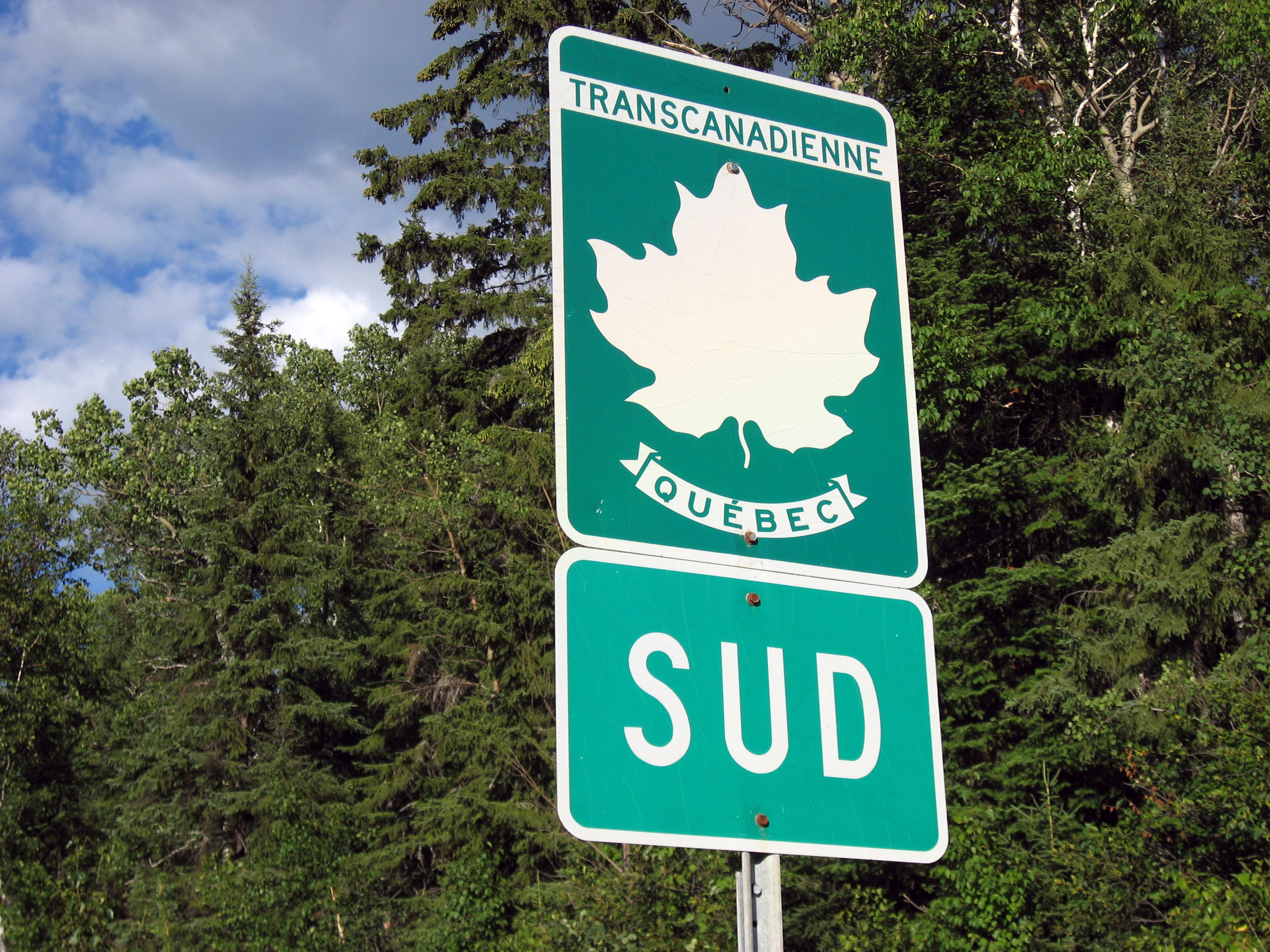
 The name alone says it all. The French spelling on “Canadiens” is symbolic of how Quebecers see themselves as different from the rest of Canada. But it’s more than that. This team collectively holds the pulse of the province especially since the loss of the Nordiques. Its history and tremendous success make it a storied franchise that is idolized by Quebecers both young and old. The team is ruthlessly scrutinized in the media when times are bad but there are no more passionate fans than those of the Canadiens when times are good or bad. What makes them so symbolic is that they have always been a constant no matter what goes on inside the province. They won Stanley cups during World Wars, depressions, and internal upheaval totaling 24 which is more than any other team in the game. Their ability to captivate the province, as well as exemplify the English-French rivalry when playing Toronto, makes them the ultimate symbol of Quebec society.
 There is nothing that better brings together all aspects of rural Quebec life than Roch Carrier’s timeless classic “The Hockey Sweater.” The idolization of Maurice Richard by all Quebec boys and the sheer horror of wearing a Maple Leafs sweater resonates will all Quebecers who read this. The mother ordering clothes through the Sears catalogue for the large Catholic family is a perfect example of this. The story blends the two religions of Quebec, Catholicism and hockey, in both a slightly comedic but also very true fashion. Scenes such as the priest reading the bible before stopping for the Canadiens game on television or the Priest being the teacher as well as hockey referee all speak to this. The references to Quebec life are too numerous to list completely but the story is simply a perfect time capsule of traditional Quebec life which is as nostalgic to Quebecers today as it was typical of Quebecers at the time the story is set.
Subscribe to:
Posts (Atom)